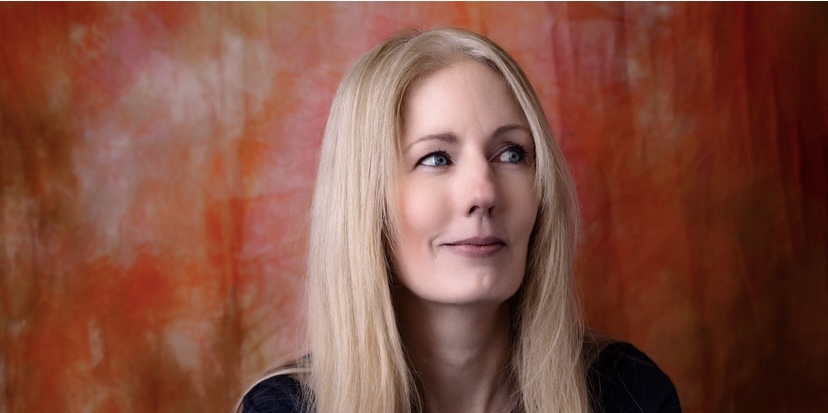
‘Being totally immersed in the genre as a reader meant it was only a matter of time before I tried my hand at it myself’
Rachel Amphlett has an extensive back catalogue of crime and thrillers as well as a well received podcast on a similar genre.
She has managed to build a huge following for her stories and has multiple series over which her different characters have evolved.
Rachel is also an independent publisher and here she reveals all to The Book Insider about her journey down this route and how she has made it such a success that she became a bestselling author in the USA Today charts.
What is it about crime writing that hooked you in and made you want to publish novels in that genre?
I started reading crime and mystery fiction from a very young age – one of my earliest reading memories is being given some second hand copies of two of the Famous Five books for my fifth or sixth birthday, and by the time I was 11 my Grandad was encouraging me by lending me his copy of Jack Higgins’ The Eagle Has Landed.
I think, as with a lot of crime fiction fans, it’s the knowledge that – most of the time – the bad guy gets caught. There’s that sense of justice that isn’t always evident in real life. Even if you’re reading about two bad guys, one will usually have some redeeming features so that you end up cheering for them.
Being totally immersed in the genre as a reader meant it was only a matter of time before I tried my hand at it myself, and my debut thriller White Gold was published in 2011.

Tell me about how you ‘accidentally’ became a private investigator and how it will help develop future stories.
That all started early on in the winter lockdown of 2020 – in fact, that year has been responsible for some of the most exciting projects I’ve done during my writing career including the new Case Files: short crime fiction story podcast.
Back then, I knew I wanted to write an amateur investigator story (which is still in development, a.k.a. going around in my head) and although I was fairly confident about murder investigations from a police point of view after writing so many books in that genre, I didn’t have the comfort of knowing much about private investigators.
I stumbled across an online course that was reasonably priced and spent my afternoons working through the material to the point where, about halfway through, I had the opportunity to do a quiz to test my knowledge to date.
- The Serpent Under continues Bonnie MacBird’s glorious Sherlock Holmes series
 “The sixth instalment from Baker Street continues to invoke the Holmes of Conan Doyle” There… Read more: The Serpent Under continues Bonnie MacBird’s glorious Sherlock Holmes series
 - Mona Susan Power spotlights harsh realities of indigenous people in National Book Award listed A Council of Dolls
 “There is every chance this will be viewed as a modern masterpiece” The harsh realities… Read more: Mona Susan Power spotlights harsh realities of indigenous people in National Book Award listed A Council of Dolls
 - GD Harper unravels the mystery of Arden and William Shakespeare
 “Thoughtful and entertaining with a fantastic mix of fact and fiction” Arden might not be… Read more: GD Harper unravels the mystery of Arden and William Shakespeare
 - Rupert Stanbury gives Pimlico to the People with homeless charity pledge
 “His characters went away with food for thought” Author Rupert Stanbury has pledged to give… Read more: Rupert Stanbury gives Pimlico to the People with homeless charity pledge
 - From small acorns grows Jules Acton’s mighty Oaklore
 “Adventures that help you see the wood from these extraordinary trees” Jules Acton is finely… Read more: From small acorns grows Jules Acton’s mighty Oaklore
 - A Bonsai Tree Called Geoff brings more arresting insights into the Police from ex-cop
 “There is something endearing about reading tall tales from a life’s work” John Donoghue has… Read more: A Bonsai Tree Called Geoff brings more arresting insights into the Police from ex-cop
Well, that turned out to be an online exam and before I knew it, I had an invitation to go to London to sit the formal exam for a BTEC Level 3 in Private Investigation. There were a few hiccups between 2020 and summer 2022 to actually get there what with Covid and other matters, but I passed the exam and became a qualified PI in August.
What was very apparent from the course are the limitations imposed upon investigators when it comes to data protection and privacy issues – I like to make my crime fiction as realistic as possible, the same as I do with my spy thrillers, so having more practical information about what my protagonist can and can’t do is essential.
From studying the course, I can now concentrate on creating a story where the protagonist has defined obstacles to overcome – both from a practical investigation point of view, and from whatever the antagonist throws at them.
Now I just have to write the story…

What has led you to write short stories?
I started out writing short stories and having some success with those prior to writing my first novel. It was a way to test the water again with creative writing as what with playing guitar in bands for seven years and then moving to Australia, I hadn’t written anything in years.
Those early stories had more of a speculative fiction atmosphere about them – I love Rod Serling and Richard Matthieson’s writing, as well as Stephen King’s short stories where he asks “What if?”. Roald Dahl is obviously an influence too, and although I was too young to watch Tales of the Unexpected when it was on TV in the 80s, I remember the music well and have read the stories since then.
I returned to writing short stories in 2020, more as a palate cleanse after writing the first three books in my Mark Turpin series one after the other, and tied that in with undertaking some online writing craft courses with some mentors of mine in the USA.
That served to dust off some old writing skills and also pushed me out of my comfort zone but it had the advantage of lifting my writing to another level when it came to writing novels too.
Plus, I get to bend the rules a bit with the short stories – the bad guys don’t always get caught, and I get to play with some different characters every time that might lead to new ideas for longer length works.
And it’s fun.
When did you realise you could write a series based on your characters?
That wasn’t something I’d planned for at all.
About three months after I first published White Gold in 2011, I started making sales from readers around the world (not just family and friends!), and suddenly I was getting emails from people asking when the next Dan Taylor book would be out because they’d fallen in love with the character.
I honestly hadn’t expected that, so there was a bit of a mad scramble to pull together some research and chase up an idea that had been bobbing around in my head for a few weeks.
Under Fire was published in 2013 and there are currently four books in that series.
What advice would you give a budding author who might consider independent publishing?
I’d highly recommend joining the Alliance of Independent Authors – and never, never, pay someone to publish your book for you.
You can do all of this yourself – just remember that in amongst all the business stuff to write the next book, because that’s the best marketing tool you’ve got.
Rachel Amphlett’s books and podcast can be found at here website HERE.
 The Book Insider
Leave a comment