
“Places Stevie in upper echelons of war storytelling alongside Anthony Doerr”
There have been plenty of stories written about the Second World War and there has often been a difficulty in finding a new angle on the atrocities and emotions of being involved in such a devastating period in world history.
Stevie Davies has managed to create an addition to the war catalogue which can set her apart from so many others and place her in the upper echelons with the like of Anthony Doerr’s All The Light We Cannot See with her latest novel, Earthly Creatures.
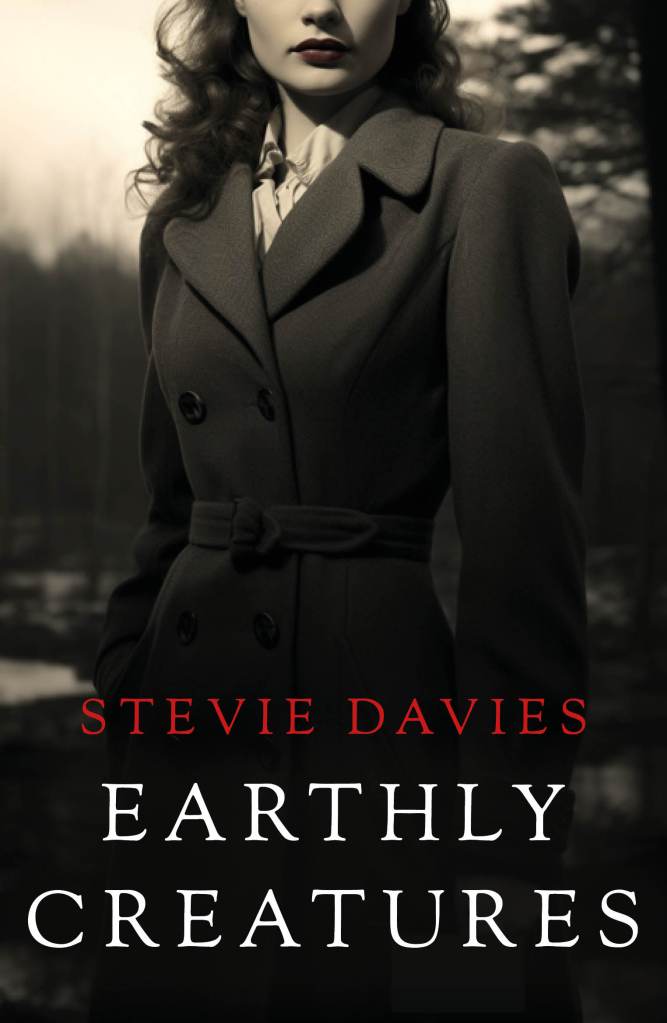
Stevie has previously been longlisted for the Booker Orange Prize and she is once again at the top of her game with this tale of Magdelena Arber’s time in East Prussia as a school teacher and how the horrors of the war unfold and her knowledge of what the Nazis are doing, challenges all that she has known so far.
Dramatic irony brings some foreboding to the story with the characters discovering for themselves what we, the reader, know due to information about World War II.

Stevie says about her idea for Earthly Creatures: “The novel is in the deepest sense a love story – between mother and child, father and daughter, woman and woman, teacher and pupil, friend and friend.”
While this is so, the story is one that will stay long in the memory for the horrors described in its pages, though sensitively handled it doesn’t hold back in describing the brutality suffered by so many.
Earthly Creatures poses the question: how would you behave when forced to live in a dangerous and deplorable regime and highlights all the lessons we are still yet to learn. Fans of historical fiction will devour this book.
The premise is such: Spring 1941: Magdalena Arber is an idealistic 20-year-old bookworm hungry for life and knowledge. After being conscripted into service as a school teacher in East Prussia, she lodges with Ruth and her twin daughters, Julia and Flora.
Magda is already conflicted between fidelity to her indoctrinated beliefs and her father’s humanist values, but when the local doctor and undercover eugenicist, Felix Littmann takes a sinister interest in the twins, she finds herself exposed to the dark and evil nature of the Nazi regime.
This is a thoroughly recommended read and one that doesn’t shy away from the more harrowing details of the war, especially being on the front of the Russians and Germans. Enjoy might not be the right word for those reading this but it is certainly an important read and one that should be hailed.
 The Book Insider
Leave a comment